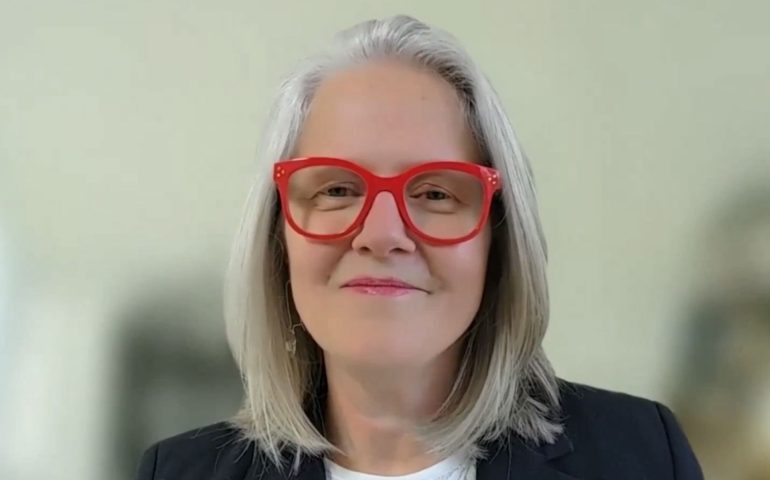
On March, 5, 2024, the Federal Trade Commission hosted a virtual workshop, Private Capital, Public Impact: An FTC Workshop on Private Equity in Health Care to examine the role of private equity investment in health care markets. Our very own Karen Simonton spoke on behalf of CPCC:
Thank you, Tamar, and again, thank you to the FTC for lifting this valuable workshop. Yes, we are. We are a network of independent musculoskeletal physicians at the OrthoForum. 5,000 physicians strong in 45 states, and soon to celebrate our 25th anniversary. Our physician members lead community centers of excellence, delivering access and cost-effective care to their respective communities. They get people back to their families, their employers, and their lives. They get us back to moving. I’m here today to speak on behalf of the Coalition for Patient-Centered Care (CPCC) where we are a founding member. CPCC represents a diverse group of independent physicians and their allies. We stand together in opposition to PE’s acquisition and subsequent control of independent physicians, which upends the sacred physician-patient contract by emphasizing profits and revenue growth as well as moving decision-making outside of the communities where we are serving. We fundamentally believe that physician’s autonomy leads to better patient care.
The OrthoForum is proud to work on this important effort with other CPCC founding members, including the Association for Independent Medicine led by Dr. Marco Fernandez and other esteemed physician colleagues including Dr. Keith Smith, Dr. Doug Lundy, Dr. Marty Makary, and Dr. Matt McCord. We care because we actually have experienced the termination of several of our own members, about a dozen, who’ve been acquired by PE because, to be in the OrthoForum, you must be fully independent and in control of your practice. We knew someone had to begin educating the public and government on how PE, something that is not part of the community, negatively impacts our patients and the communities where we’re serving. Private equity interferes with the social contract between the doctor and the patient, and the interference has far-reaching consequences to the community. You’ve heard a lot today about access. Case in point anesthesia.
There is not a community across the nation that has not been impacted by PE’s work in the anesthesia space, and anesthesia is an integral partner of our MSK physicians. Without them, we can’t perform surgeries, and we can’t get people back to their activities of daily living. Reduced anesthesia access takes the form of long-term community anesthesiologists who must move out of town, similar to Dr. Jones’ experience as an ER doctor to find a place to serve their patients directly, or anesthesiologists who are not allowed to serve in specific facilities or maybe out of network due to third-party contracting that is no longer in the control of the physicians and done in the interest of the community. For 22 years, I lived in one of these community centers of excellence here in Virginia, and I saw firsthand how our physicians work directly with other stakeholders in the community with the singular goal of serving patients.
This means sideline coverage of youth sports, serving in the ER for trauma coverage, and on safety panels for industry and manufacturing employer partners, and to serve on nonprofit boards to enhance the community’s quality of life. Our independent physicians and their clinical teams worked with other primary care and facility partners to build quality and efficiency into all plans of care. This hard work is done in the spirit of the community’s greater good, not as a paycheck. Their work supported the vibrancy of the businesses, but also their families and friends, because we are of the community as independence. And every community is different. Staffing and facility decisions have to be made at the community center of excellence level, not by a third party who is disinterested in the community. They have to be made in the interest of patients and outcomes and not spreadsheets and income statements.
So why is all of this independence worth preserving? Because independent physicians are the foundation of a healthy community. Ask any employer who is getting ready to expand their business footprint. Healthcare resources in a community are part of that decision-making process for expansion, and we are tax-paying members of the community. We pay BPO and real estate and personal property taxes, and to echo Dr. Appelbaum’s comments, independent medicine, we are Main Street, not Wall Street. And further, we are in it for the long haul. Some of our members are more than 100 years old and standing in the gap, keeping our communities healthy and vibrant. We are in it for stewardship for the long haul. Thank you, Tamar.